Designing a Decision System for Financial Avoidance
The Core Problem~
Users didn’t abandon finance apps because of complexity — they avoided them because each interaction forced emotionally loaded decisions.
Finnovó explores how restructuring when and how decisions appear can reduce avoidance under cognitive load.

Lead UX Researcher · Product Design · AI Interaction · 4 weeks
Finnovó explores how AI-assisted systems can reduce decision fatigue and guide financial behavior — while preserving user control and trust.
Modern finance products expose users to balances, charts, categories, alerts and recommendations.
Instead of creating clarity, this can create decision fatigue:
choice overload → emotional pressure → avoidance → abandonment
The result is not lack of discipline — but decision fatigue.
Instead of designing another finance app, I explored how an AI-assisted system could help users make fewer, better financial decisions without removing their agency.
More information → More choices → More cognitive effort
Finnovó
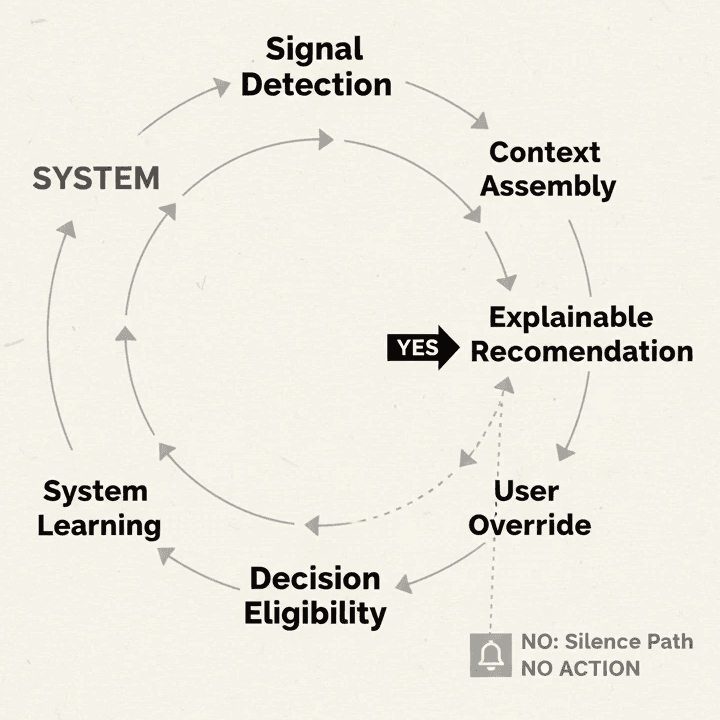
Context → Decision support → User control
Behavior
Signal
Suggestion
User Control
Feedback
→
→
→
→
→
01
Reduce decisions, not information Accuracy
The system doesn't surface information merely because it exists.
It surfaces information when doing so can remove a meaningful decision.
03
Design for failure, not perfection
Failure is the primary use case.
When someone overspends, Finnovó doesn't punish them with:
warnings / red screens / guilt / corrective pressure
Instead:
mistake → reflection → recovery
02
AI advises. It doesn't decide.
Every recommendation exposes:
Why now → What assumption → Expected outcome
And users can:
Accept / Delay / Reject
No autonomous financial action.
Interface as Consequence (UI)
From Decision Logic → Information Architecture

→
→
→
→
→
Each surface exists to support a specific cognitive state — not a task list.
user flows


hover on mockups!
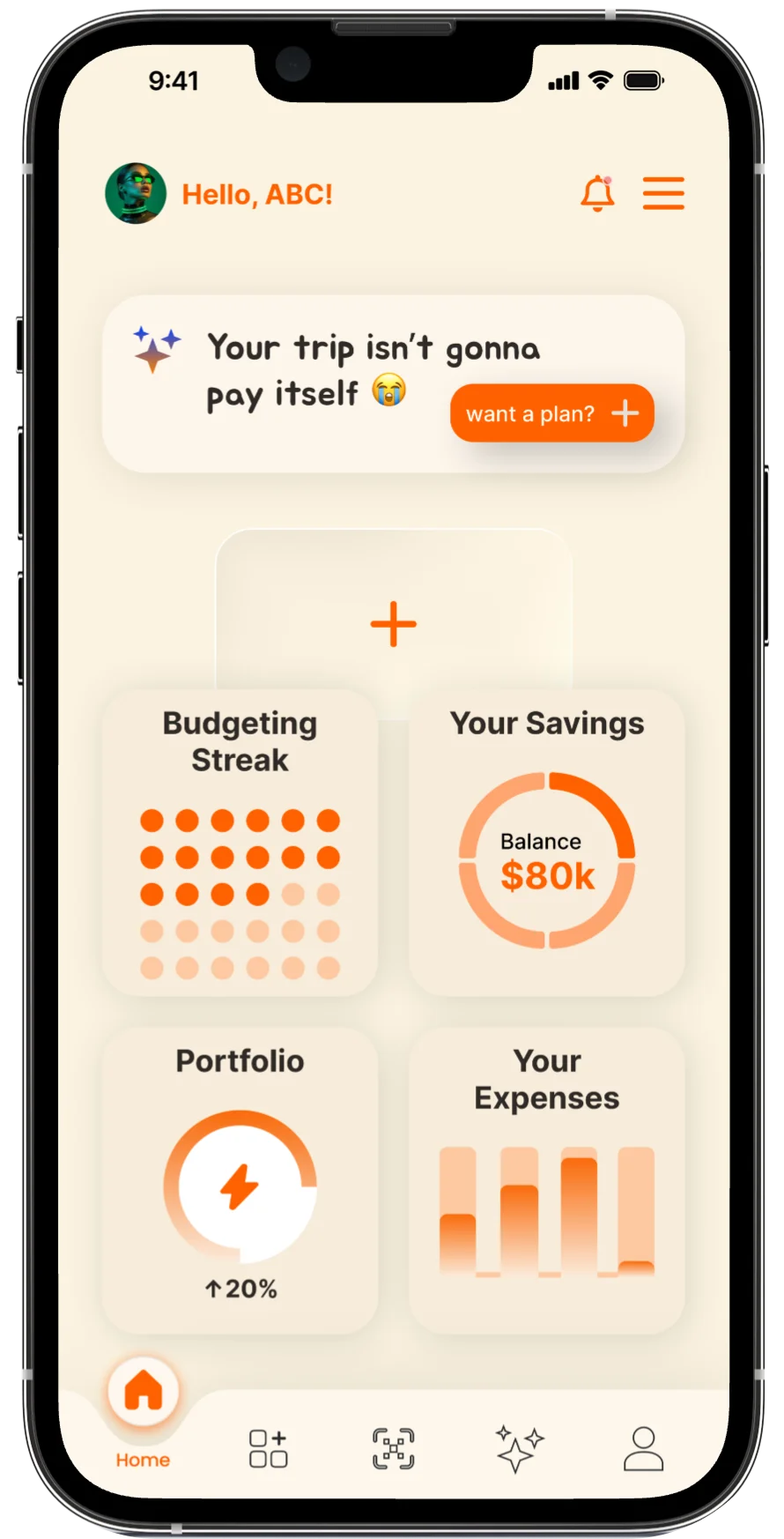
Home
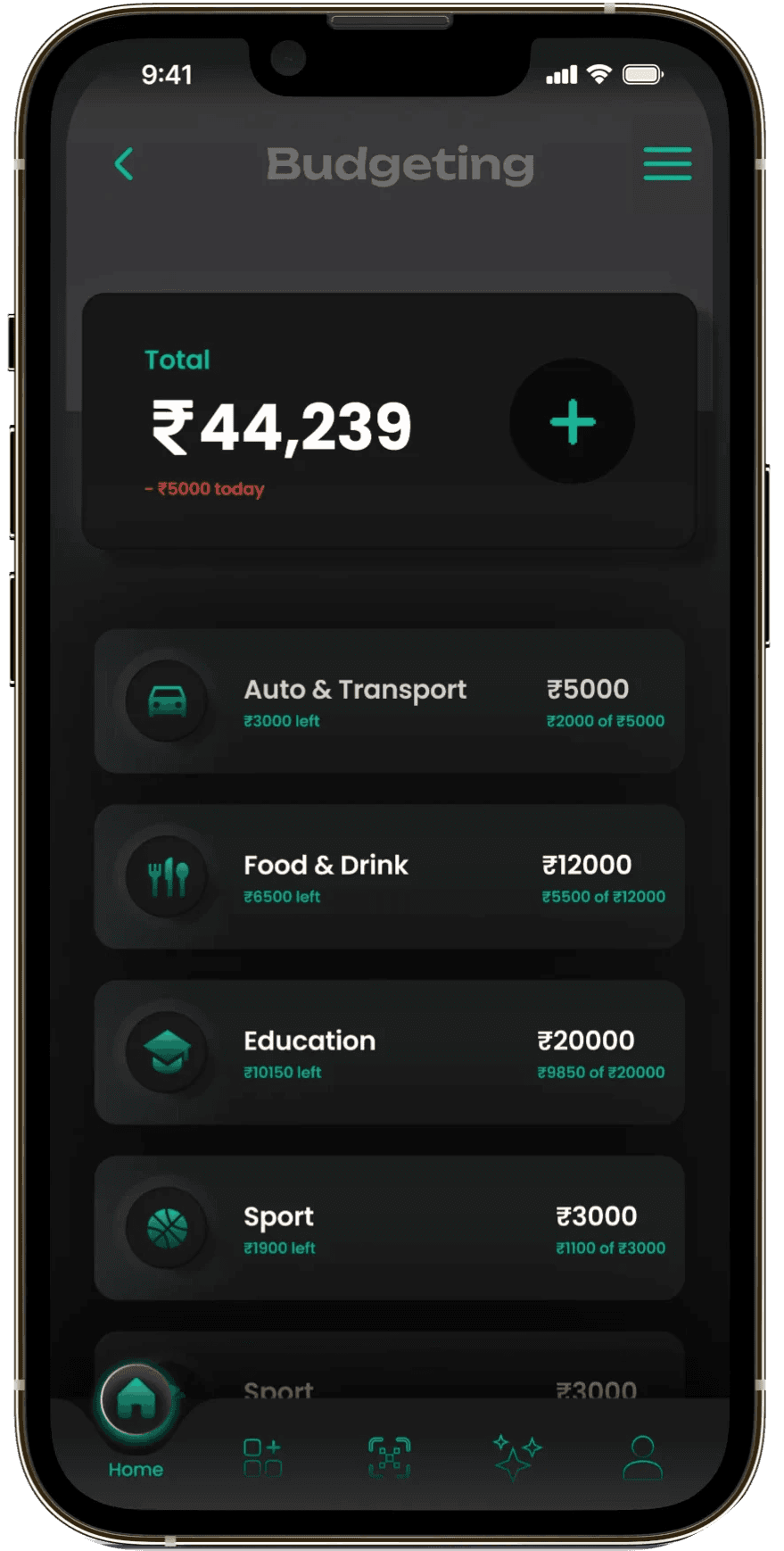
Budget
Boundaries, not discipline.

AI Recommendation
Advisory, Not Authority
Iteration 01
Initial Assumption
Financial information should be immediately visible for convenience.
Challenge
Sensitive financial data should require intentional access. Friction can act as both a security and privacy layer.
Design Decision
Balance information was removed from the home screen and placed behind a deliberate access point.
Resulting Home Screen Philosophy
Instead of:
Home = Information
Finnovó evolved toward:
Home = Action
The primary surface now prioritizes frequent user actions such as QR-based payments, while sensitive financial information remains accessible through intentional navigation.
Before
Immediate
Convenience
Monitoring
→
→
→
After
Protection
Action
Intentional
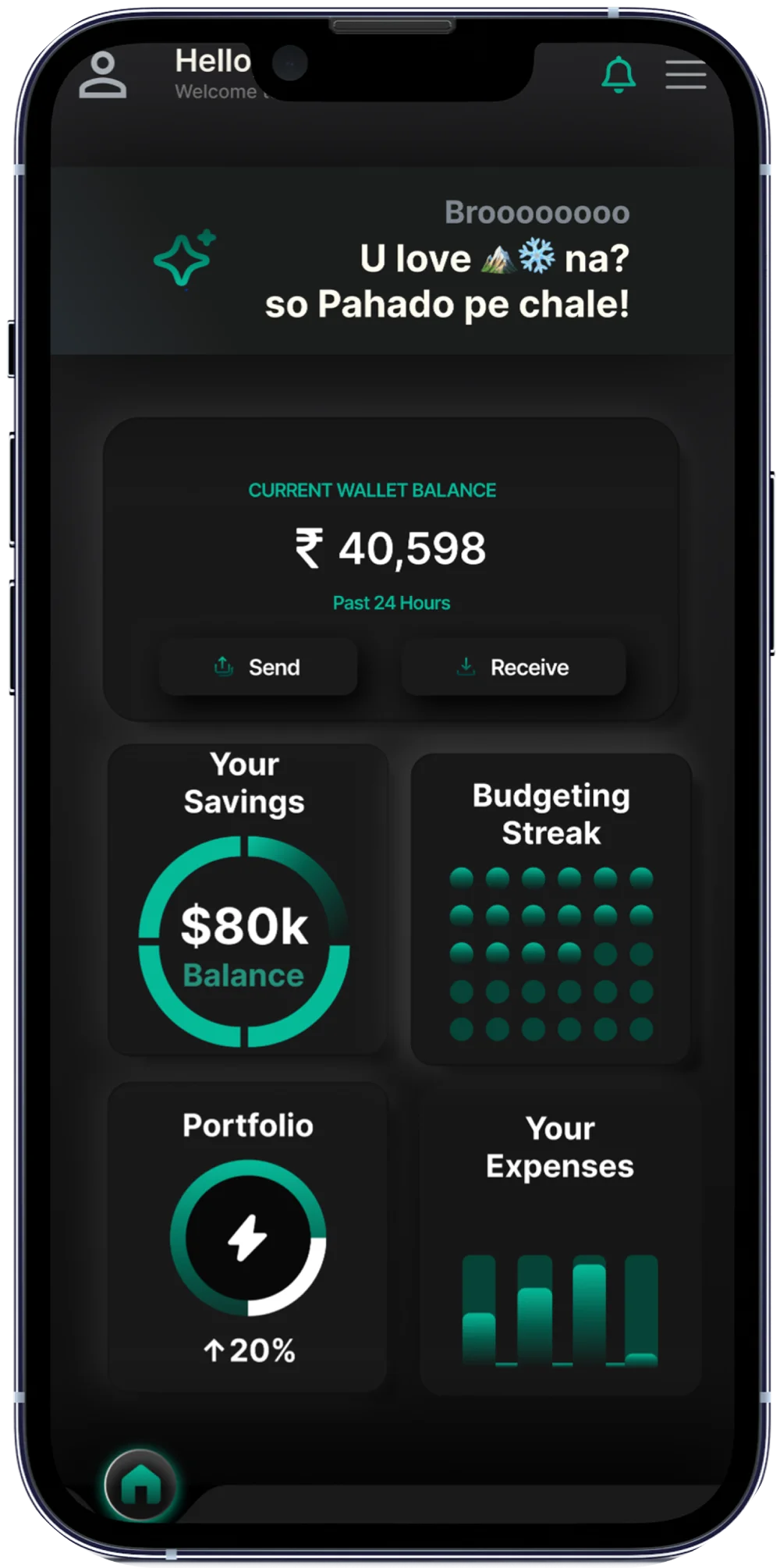
Immediate balance visibility

Intentional access + action-first home
Outcome
Finnovó became a conceptual decision-support system designed around:
fewer unnecessary decisions
explainable AI guidance
reversible actions
non-punitive failure handling
reduced decision pressure
This is a conceptual system, not a production-validated product.
What I learned
01
Behavior before features
Designing around behavioral problems produced stronger decisions than starting with a feature set.
02
AI needs boundaries
The interesting design problem isn't what AI can do, but when it should remain silent.
03
Failure is part of the experience
Trust isn't only built when the system is right; it's tested when the user or system is wrong.
These aspects were validated through design reasoning, simulated flows, and behavioral modeling:
Want to go deeper?
ッ

Design isn't about Aesthetics, it's about Storytelling, evoking emotions and driving actions